
The autumn of 1908 was a very troubled time. National conflicts between Germans and Slovenians had reached boiling point. Protest demonstrations, the breaking of windows in German shops, the removal of German signs and other actions united the Slovenian people. The army intervened and shot at the demonstrators, with the subsequent funerals leading to new unrest. The result was that Ljubljana took on a new, Slovenian, image.
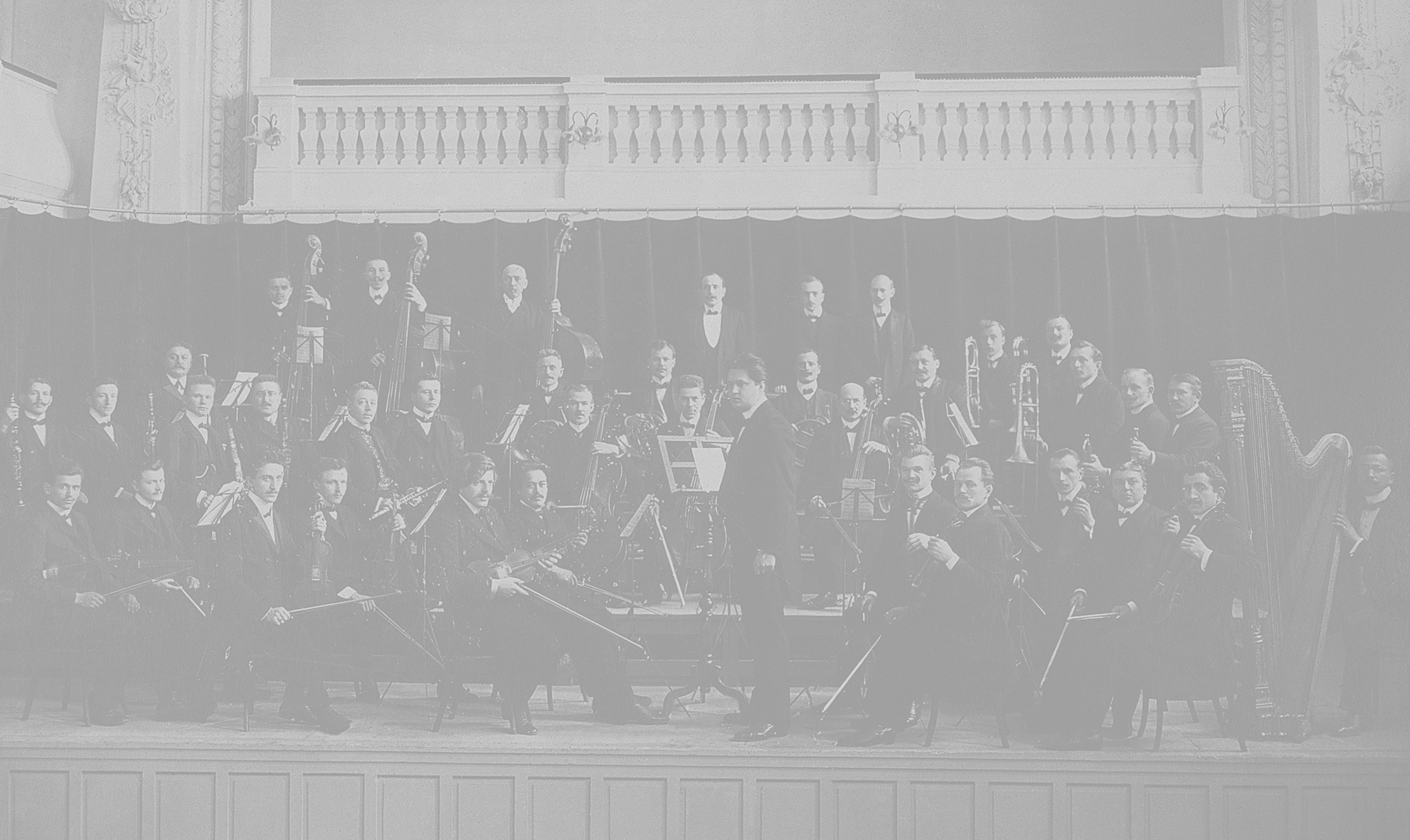
Around this time, preparations were under way for the transformation of the old “society band”, founded in 1900, into a new Slovenian concert orchestra, an orchestra that was essential for Slovenian music at the time, as without it the work of the Slovenian Opera would have been made very difficult.
Following an agreement with the Musical Society, the new orchestra was founded on 23 October 1908 and was called the Slovenian Philharmonic. The young Czech conductor, Vaclav Talich, who had already won recognition in Ljubljana with the “society band” with a successful concert on 23 July 1908, was engaged as the orchestra leader.
Due to its financial needs, the orchestra was forced to appear at various entertainment and festive events, as well as in front of “dinner tables” in the Union restaurant, just as its predecessor had.
The first full concert was on 8 November 1908, an event that was a comprehensive success.
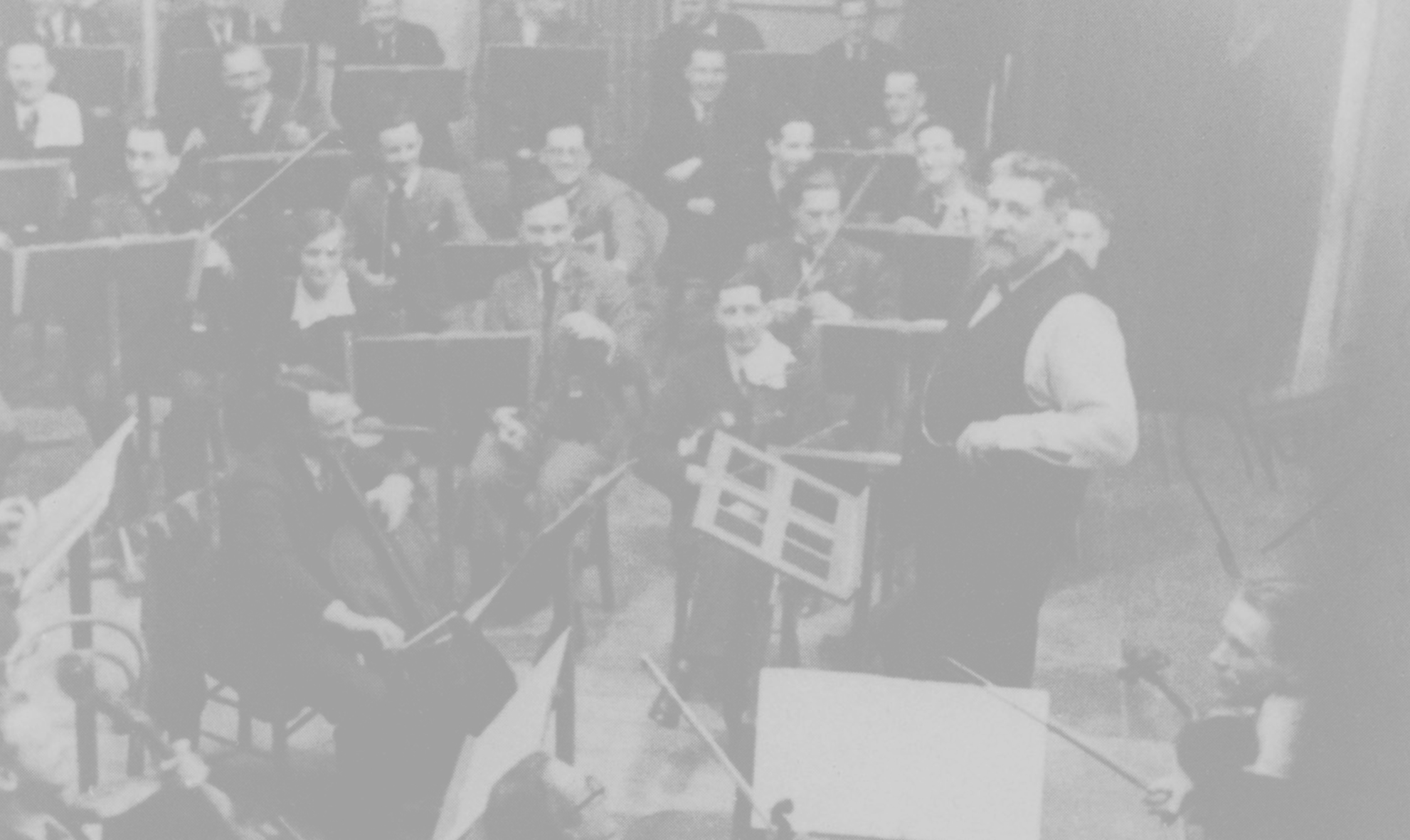
Within a short time, Talich had established himself as the central musical figure in Ljubljana. Although some people were not very happy about this fact, his work gave new impetus to Slovenian music, as now even orchestral pieces were being composed, something that had been a rarity before.
In its first season, the Slovenian Philharmonic Orchestra appeared a total of 190 times: twice at large symphonic concerts, while the other appearances were mainly at various events in restaurants and similar locations. This total does not include its appearances at the Theatre.
The Graz newspapers, which as a rule were opposed to Slovenians, attacked the orchestra in March 1911, calling it “an inferior dinner entertainment band” that existed at the expense of the famous Philharmonic Society, and accusing it of being a “violent swindle, a robbery”, etc. The Slovenian Philharmonic responded to the accusations with dignity, aided by the great success of their performance of Beethoven’s Symphony No. 5.
In the journal Novi Akordi, Pavel Kozina complained: “Is it not typical and sad that in the musical life of Ljubljana everyone who is capable has to be removed?”
The formation of the Slovenian Philharmonic Orchestra was a brave act on the part of the new Slovenian musical cultural circles. With more prudent management the orchestra could have became one of the pillars of instrumental music in Ljubljana. However, agreement could not be reached even within the Musical Society, let alone in Ljubljana political circles. The Slovenian Philharmonic was supported by the Ljubljana council and was therefore considered liberal, which is why the clerical provincial committee did not give it its support. The struggle between the two main political blocs – clerical and liberal – which had begun in the early 1890s, continued with increasingly serious results right up to the First World War. The third important factor were the Germans, who were well organised in all areas and had a great deal of support outside Carniola. Slovenian-German relations had never been good and new conflicts arose continuously.
A special chapter in this saga was the attitude of the clerical party towards the cultural institutions it viewed as “liberal”. The latter included the Slovenian Philharmonic, the Musical Society and the Provincial Theatre, from all of which it withdrew its support. When the Theatre ceased to exist the Slovenian Philharmonic did likewise, and this held back the normal development of music, particularly instrumental music, in Slovenia for a long period.
With the outbreak of the First World War hard times descended on the Society, as many musicians had to leave for the front. In these difficult times, the Society’s helm was taken over by the zealous violinist, concert leader Hans Gerstner, who had been Zöhrer’s right hand and the leader of the chamber concerts.
There were fewer concerts than before the War, but the Society never quite ceased to perform altogether. In recognition of his extensive service to the musical life of Ljubljana since his arrival in 1871, Gerstner was appointed as the musical director of the Philharmonic Society. He was not able to continue his work for long, however, as the Philharmonic Society was soon abolished by the newly formed state of Slovenians, Croats and Serbs, without a replacement being put in place. The absence of a symphony orchestra represented a serious impoverishment of music in Ljubljana.
Until 1945, the Society became merely an insignificant appendage of the Musical Society.